Holistic Review: An unusual historical setting, a fantastic new villain, and arguably the best characterization that this TARDIS team ever gets.
When people review The Mark of the Rani, they invariably mention the two writers: husband-and-wife team Pip and Jane Baker. They do not usually mention this pair with anything approaching respect; all too often, it's "look at the ridiculous dialogue!" supplemented by examples of their impressive (or, to some, ludicrous) vocabulary. Well, I'd just like to make it clear right up front that I love this writing team. Their novels, I suspect, had a profound influence on me (and yes, I love their writing style. A shock! Incredible!) and I'm quite sure they increased my vocabulary no end. Besides, their love of language is eminently suited to the sixth Doctor, whose speech patterns tend to be on the poetic side anyway (witness the consummate ease with which Colin Baker delivers the line "Indeed, I'm expressly forbidden so to do"). So, as far as I'm concerned, it's a great match. But, for those of you who just can't figure out what on earth Pip 'n Jane are talking about, here's a handy-dandy reference guide. (and I learned a few things while compiling it, too!)
THE PIP 'N JANE DICTIONARY part 1
amicable adj. Characterized by or exhibiting friendliness or goodwill; friendly. apposite adj. Strikingly appropriate and relevant. apprise vt. To give notice to; inform. apt adj. Exactly suitable; appropriate. astute adj. Having or showing shrewdness and discernment, especially with respect to one's own concerns. blunder vi. To make a usually serious mistake. calibre n. Degree of worth; quality. capricious adj. Characterized by or subject to whim; impulsive and unpredictable. cardinal adj. Of foremost importance; paramount. claptrap n. Pretentious, insincere, or empty language. collaborate vi. To work together, especially in a joint intellectual effort. contemplate vt. To consider carefully and at length; meditate on or ponder. devise vt. To form, plan, or arrange in the mind; design or contrive. dilettante adj. Superficial; amateurish. divest vt. To deprive, as of rights or property; dispossess. egoist n. One devoted to one's own interests and advancement; an egocentric person. envisage vt. To picture in the mind; imagine. epithet n. A term used to characterize a person or thing. erstwhile adj. Former. feckless adj. Lacking purpose or vitality; feeble or ineffective. flummery n. Meaningless or deceptive language; humbug. fortuitous adj. Lucky or fortunate. ghastly adj. Inspiring shock, revulsion, or horror by or as if by suggesting death; terrifying. grandiose adj. Characterized by greatness of scope or intent; grand. grovel vi. To behave in a servile or demeaning manner; cringe. handiwork n. The product of a person's efforts and actions. hoist vt. To raise or haul up with or as if with the help of a mechanical apparatus. imbecile n. A stupid or silly person; a dolt. impasse n. A situation that is so difficult that no progress can be made; a deadlock or a stalemate. impregnate vt. To fill throughout; saturate. infuriate vt. To make furious; enrage. jest vi. To act or speak playfully. lout n. An awkward and stupid person; an oaf. machination n. A crafty scheme or cunning design for the accomplishment of a sinister end. malignant adj. Showing great malevolence; disposed to do evil; highly injurious; pernicious. maudlin adj. Effusively or tearfully sentimental. microbe n. A minute life form; a microorganism, especially a bacterium that causes disease. moron n. A stupid person; a dolt. objective adj. Uninfluenced by emotions or personal prejudices. obnoxious adj. Very annoying or objectionable; offensive or odious. obtuse adj. Lacking quickness of perception or intellect. opportune adj. Occurring at a fitting or advantageous time. phial n. A vial; a small container, usually with a closure, used especially for liquids. piquant adj. Pleasantly pungent or tart in taste; spicy. preposterous adj. Contrary to nature, reason, or common sense; absurd. reciprocate vt. To show, feel, or give in response or return. smug adj. Exhibiting or feeling great or offensive satisfaction with oneself or with one's situation; self-righteously complacent. sterile adj. Lacking imagination, creativity, or vitality. susceptible adj. Easily influenced or affected. tandem n. An arrangement of two or more persons or objects placed one behind the other. tether n. The extent or limit of one's resources, abilities, or endurance. touché int. Used to acknowledge a hit in fencing or a successful criticism or an effective point in argument. undoubtedly adv. Accepted as beyond question; undisputed. untimely adj. Occurring or done at an inappropriate time; inopportune. vendetta n. A bitter, destructive feud. venture n. An undertaking that is dangerous, daring, or of uncertain outcome. vulgar adj. Deficient in taste, delicacy, or refinement. |
Pip and Jane also achieve the amazing feat of finally showing us what this Doctor-companion pair is capable of. Up until now, with the exception of Varos, the sixth Doctor has been unstable and boisterous, bordering on the unlikeable. Here, though, he's full of good humor and moral outrage, and feels very much like the Doctor we know and love. Colin Baker gets some great moments throughout and gives a pleasingly subtle performance (I really enjoy his exaggerated American delivery of "a hunch", the groan-inducing but cute "peripheral vision" joke, his attempt to shake Stevenson's hand while strapped to the gurney, and his little "aah!" as the pole slips and he edges closer to the mine beneath him), even if he does fit in a round of gurning when dangling over t'pit. And of course there's a stereotypical sixth-Doctor moment ("Malfunctioning? Malfunctioning? MALFUNCTIONING?!") that, for some reason, makes me grin here. But his finest moment is probably the scene in which the Doctor rails at the Master and the Rani in moral outrage over the metamorphosis mines.
Nicola Bryant lucks out even more. After her impressive début, Peri largely degenerated into a helpless whiner. But here, oh, Peri is so wonderful. She's still worried about getting the TARDIS back, and she still tries to talk the Doctor out of the courses of action she considers unwise, but otherwise this story is a true return to form for Peri. She's quick-thinking, inquisitive, intelligent enough to recognize the names of historical geniuses, and can turn on the charm when it's needed. Throughout the story, she expresses a great desire to stay with the Doctor rather than being left out of the action. She picks up on the clue that the mob must have come from the bathhouse because they were clean, she sneaks into the bathhouse to rescue the Doctor, she tries to drive away the mob attacking the Doctor by throwing lumps of coal at them while calling for help, she fetches the masks to protect them from the gas, she holds the TCE on the Master and the Rani and successfully evades being hypnotized. And she even runs back to say thanks to the drayman who gave them a ride into town. Delightfully, the icing on the cake is that Peri's botanical interests are not only mentioned, they're actively used! She is interested in visiting Kew Gardens, knows the history of hedgerows, and goes on a valerian-collecting expedition with the ultimate aim of brewing a sleeping draught. And I love her dress, particularly the jacket (it's an unusual combination of colors, but it really looks pretty on her, and I'm a sucker for puffed sleeves - especially these, with a different color in the crease), and her hair looks great up.
Now, given Peri's history of being tossed ludicrous lines that poor Nicola just can't deliver convincingly, you would think that Pip and Jane's sesquipedalian tendencies (how's that for style?) would really and truly sink her. But, amazingly, overall they know exactly how to write for Peri, who sounds much more natural in this story than usual (I love "Well, if the place gives you the creeps, let's get out of it." and her delivery of "Well, I'm lost."). Pretty much all of the mouthful lines go to the Time Lords. This increase in naturalistic dialogue really seems to energize Nicola, who not only turns in a fantastic performance all around (I love the scared look on her face as she tries to squeeze past Josh in the bathhouse, and her resigned "Oh no..." when following the Doctor into the Rani's TARDIS), but easily copes with the few more formal lines she's given (check out "You suspect another motive?", "Well, he's undergone a change now", and "Hasn't she any conscience?"). Granted, there are a couple that give her some trouble ("He wants to pervert history!" and "Trouble is, I know absolutely nothing about the plant life in this area.") but it's a very rare occurrence here. She does have a bit of accent trouble on "Later!" but it's a minor detail and otherwise she's very consistent. And together, the Doctor and Peri are fantastic - they're very jokey, and all smiles, with barely any arguing at all (despite what the Doctor would have Lord Ravensworth believe). I really like the fact that when the Doctor finally reappears, after having been carried off in the Rani's TARDIS and leaving Peri to panic about being stuck in the eighteenth century, she is clearly upset at nearly being abandoned, but is not resentful about it, and once she gets it off her chest, they're back to smiling like the old friends they are.
I'm still not quite finished praising the Bakers. I think they've plotted their story quite nicely, such that I didn't really notice any major plot holes while I was watching, and everything seems to happen for a logical reason (well, except maybe for the Master dressing up like a scarecrow, but whatever). Now, I will agree that their dialogue is not always perfect - the two most egregious, and oft-cited, examples being the amusingly overwrought "Fortuitous would be a more apposite epithet" and the Master's line "Finito TARDIS! How's that for style?" (which, despite myself, I do kind of like). But given the wonders that they work here in characterization, plotting, and, yes, dialogue, I think such minor missteps are easily forgiven. It's also rather cool how they manage to (more or less subtly) work in messages on vegetarianism and environmentalism. Amusingly, it's also hit me that they seem to be very fond of bevies/inspirations of geniuses (besides the list of geniuses attending the meeting in this story, we have a Time Lord hit list in the Doctor's handwriting in The Ultimate Foe, and yet another bevy of geniuses assembled for evil in Time and the Rani).
All of the actors in the story turn in great performances, but I have to say that the four leads utterly eclipse everybody else. In particular, I must praise Kate O'Mara to the high heavens. She's deliciously amoral and dangerous as the Rani, a fact that is made abundantly clear when she casually murders her servants with barely a thought - chilling. And she's genuinely a good actress - look at her impressive crone walk in the beginning! O'Mara makes a creepy hag, for sure. Her laugh before the Rani's coughing fit sounds appropriately fake, too. I love listening to the Rani get angry, particularly when she's bellowing at the Master! Her entire bickering relationship with the Master is delightful, particularly the way she pokes fun at him and tries to deflate him the whole time ("You're unbalanced." and "What's he up to now? It'll be something devious and overcomplicated. He'd get dizzy if he tried to walk in a straight line." being particular favorites), not to mention her exasperated intervening in the Doctor-Master feud ("Oh, do stop squabbling and get on with it"). I think my favorite thing about the Rani, though - a fascination that I apparently share with Pip 'n Jane, if their book Race Against Time is any indication - is her ability to employ a wide variety of nasty traps, which adds an element of macabre fantasy fun to her appearances. The fact that she can set these traps meticulously, and remember their location precisely, also says a lot about her detail-obsessed personality. And her non-crone costume is great, very purple and black and silver. I like her taste in clothes. Cool boots, too. Anthony Ainley gets a good storyline here as well, as the Master seems less far-fetched than usual while still retaining his crazed, megalomaniacal edge. And he's clearly very, very evil - I mean, he uses his TCE on a poor (vicious, teeth-baring, angrily-barking) puppy! His reunion with Peri is also pleasantly handled, reminding us both how frightened Peri is of the Master, and how capable she is of standing up to him. Even better, O'Mara and Ainley have a wonderful bickering rapport that certainly shows off the Rani to her best advantage.
But I should at least mention the other actors, if only to say that I really like the regional accents they all use. Gawn Grainger as Stevenson, in particular, gets a couple of great lines: "Forgive me. 'Twere metal that took me attention" and "Make gun ready, Luke" are my favorites. I also really liked Gary Cady as Luke, although unfortunately his performance (understandably) turns much more wooden (ohhh dear... I'm sorry, I really didn't mean that to be a pun) once he falls under the Master's control.
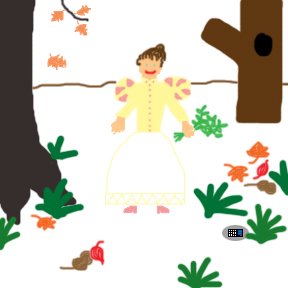
Sarah Hellings has a very nice directorial eye; this story has lots of really beautiful shots, and although there always seems to be something going on in the frame, it also feels tranquil a lot of the time. In particular, I like the overhead shot of the museum at the beginning, the shot of the Doctor using his tracking device in the background as Peri steps into the foreground, the cleverly-done-if-unrealistic-looking shot of the Master's face coming into view on the phial of brain fluid, the beautiful (and perhaps beautifully-scripted) cut from a shot of Josh and Tom to a scene in which their wives are discussing their disappearance, the gorgeous shot of the TARDIS toppling into the pit, the cute scene of Peri skipping sideways alongside the Doctor, the subtle shot of Luke lifting the iron rod to clobber Ravensworth, the racking-focus shot as the Doctor walks up behind a spider web glistening with dew... there's so much to appreciate here. The music by Jonathan Gibbs is pleasantly different; it has echoes of the usual 80s feel, but it's also got a nice antiquated feel that matches the tranquillity of the shots well. Not many sound effects in this story, but the TCE sound effect really reminds me of something else and I can't figure out what it is. (Could it be the sound of Vivien Fay's hyperspace-transporter beam?) The Rani's mines also make a great noise. And speaking of her mines, there's a really nice visual effect when they explode and turn people into trees. (Sadly, the trees are, indeed, a little silly - although far from bad - and therefore cannot quite count as a "really nice" visual effect. But as fake flexible trees go, they're pretty good! And don't forget... "The tree won't hurt you!" That scene inspired me to draw a picture of it for an Outpost Gallifrey forum thread entitled "please verify a scene that stuck in my head", in which a poster (cantthinkofone) drew an MS Paint image to illustrate the vague snippet of memory from an unidentified McCoy story. This quickly degenerated into a game that Ian Moore called "Identify The Story From This Crappy Drawing" - and which the rest of us called "pure genius"!) The shot of falling rubble overlaid onto the mine footage looks surprisingly effective, and there's a great graphic of the human brain on the Rani's equipment. Fortunately some people can create prettier computer images than I can! (okay, a lot of people...)
The location filming is lovely and very appropriate for this story; it really makes me want to visit the Ironbridge Gorge museum. I love that they used a period-authentic location. And as beautiful as the exteriors are, the interiors are quite nice too, most especially the inside of the Rani's TARDIS. Its soft pinks and greys are very pleasing to the eye, and the rotating concentric circles (a term I'm sure I learned from their novelization!) are really cool. And the outside of her TARDIS is nifty, too, particularly the lights bordering the door that flash on materialization and dematerialization.
A very amusing feature of this story is the vast number of insults that Pip 'n Jane employ, most often coming out of the mouth of either the Master or the Rani. We have "Do try not to be so obtuse", "Imbeciles!", "Those louts tried to kill you!", "You're unbalanced", "those morons you created", "you incompetent egoist", "that dilettante Doctor", "Incompetent fool, you're worthless!", "You intellectual microbe!", "You blundering woman!" and generally people calling each other "fool" and "idiot" all over the place. Most bizarrely of all, the Master at one point calls the Doctor a "crack-brained freak"!
I have definite childhood memories of this story, too. I have a feeling that I read the novelization before I actually saw the story, because I distinctly remember not being sure how to pronounce "Rani" (as usual during my early years, I was saying it wrong... "rain-eye" she is not!). As I said before, I've always enjoyed the Bakers' prose style (although their habit of titling chapters "Enter Person X" - where Person X is the Rani, Mel, Five Tetraps and a Killer Wasp, whatever - always seemed a little silly to me) and every time I see the Rani's maggots cause someone's eyes to glow blue, the word suffuse comes immediately to mind. Aside from "suffuse" and "concentric circles", the other big thing I took away from this story is valerian. If I ever need to take some kind of herbal sleeping pill, valerian is my drug of choice. Oh, and then there's Red Fern Dell. I assume it was this Red Fern Dell, and not the Fern Dell of Delta and the Bannermen, that inspired me to name a small grove of trees beside our house in North Carolina after it. (No plastic trees there, though.) I also really adore the novelization cover... beautiful colors, even if it does kind of look like the Rani's sweeping the hearth outside her TARDIS. Their book Race Against Time was a big influence, too. It was easily my favorite of the "Find Your Fate" books (although I liked Crisis in Space too... but the companionless ones were never a big draw) and all the little puzzles and gruesome fates were vastly entertaining.
Minor points:
Doctor: "Peri, how would you like to meet a genius?"
Peri: (smiling innocently) "I thought I already had."
Peri: "That dog doesn't look as though it's been fed today."
Doctor: "Psh."
Master: "What are they, parasites you've specially impregnated?"
Rani: "Well, there's a simple way to find out. Why not try some?"
(she offers him the open tin of blue maggots; he grabs the whole thing out of her hand.)
Master: "Thank you, I won't."
Doctor: "Use some of that famous American initiative! Push him outside!"
Doctor: "I wonder if I was particularly nice to her, she might - nope. No, no, of course not."
Rani: "How will that threaten the Doctor?"
Master: "Heh heh heh heh heh heh..."
Rani: "Animal matter has been metamorphosed into vegetable matter, so what?"
And then she tells Peri to "Stop bleating and do it!" What an interesting woman.
Peri: "Huh... Oh - Doctor, I - tablets..." (cough, cough) "my f- my fault."
Definitely a fun story, with great roles for the regulars and guest villains alike, and a nice tight plot. It's worth watching for the introduction of the Rani alone, but toss in a cool historical setting and the lovely interaction between the Doctor and Peri, and you've got something special indeed.